 LandRovin
Off-Roading Near Naples, Florida: The Honest Guide to Big Cypress & Picayune Strand
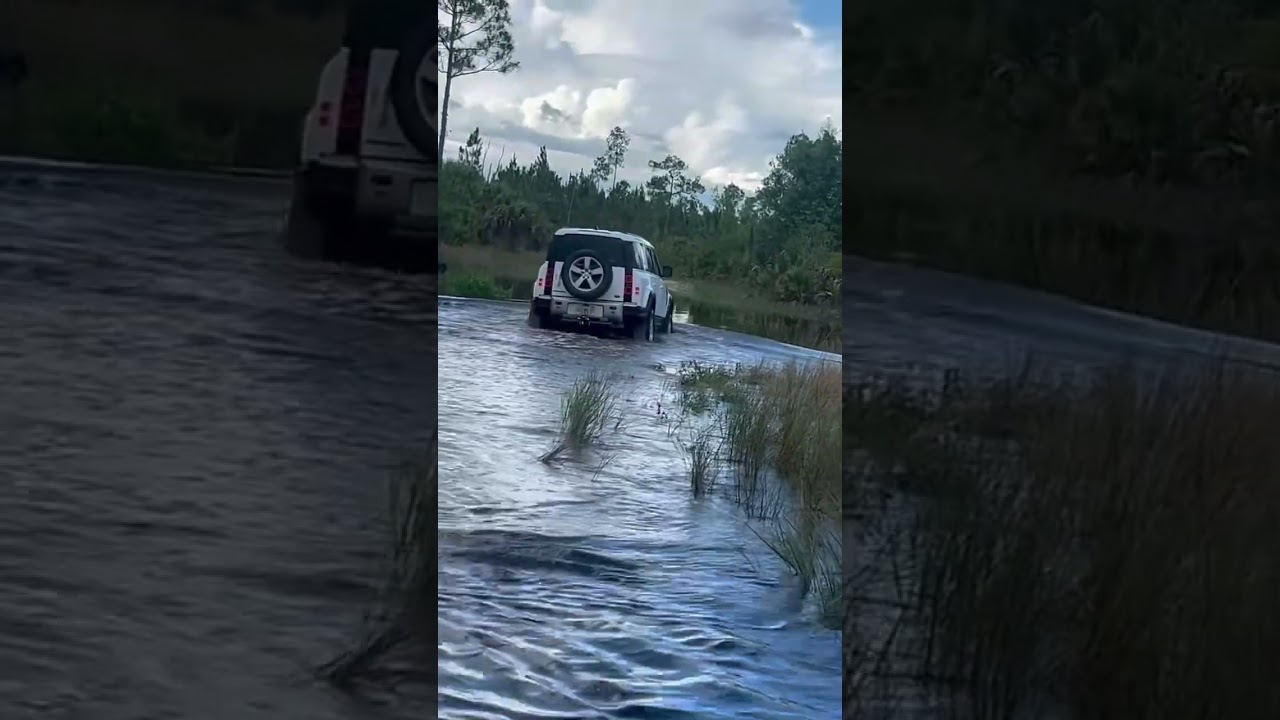
People ask me all the time where you can actually, legally take a 4x4 near Naples, Florida. The good news: Southwest Florida is home to one of the best public off-road areas in the entire country. The catch: you have to do it right, on designated trails, with the proper permits. Here's the honest guide I wish I'd had when I started wheeling my Land Rover Defender 110 out here.
Big Cypress National Preserve — the crown jewel
Big Cypress is genuinely special. It's the only unit in the entire National Park System that authorizes off-road vehicle use across a vast designated trail system — hundreds of miles of it, threading through cypress domes, wet prairie, and sawgrass. If you own a street-legal 4x4, this is the place.
To run those trails legally you need three things, and the National Park Service issues them as a package:
- An operator permit — free.
- A vehicle inspection sticker — free.
- An annual vehicle permit — this one carries a fee.
Your rig has to be a true 4x4 (four-wheel drive) and street legal — currently registered, inspected, and insured for public roads. As of now, permits are issued in person on Friday through Monday, 9:00 a.m.–1:30 p.m. at the Nathaniel P. Reed Visitor Center (33000 Tamiami Trail East, Ochopee, FL), first-come, first-served. Every vehicle needs its own permit — they're not transferable.
The single most important rule: ORVs may only operate on designated ORV trails. Big Cypress is a preserve, not a free-for-all, and the trail system exists precisely so people like us can enjoy it without tearing up the wetland. Stay on the marked route and you're a guest in good standing.
Picayune Strand State Forest — 74,000 acres in Naples' backyard
If Big Cypress is the destination, Picayune Strand is the local playground. It's more than 74,000 acres in Collier County, roughly two miles east of Naples, south of I-75 and north of U.S. 41. Much of it is laced with old dirt roads left over from a failed 1970s housing development — the infamous Golden Gate Estates grid — plus miles of sugar-sand trail through the bush.
Named routes like West Sabal Palm Road, Everglades Boulevard, and Miller Boulevard give you a real day's worth of exploring. Just know that the difficulty swings hard with the season.
Read the season before you go
Florida has two seasons out here: dry and wet.
- Dry season (roughly November–April): firmer ground, easier going — call it a 2 or 3 out of 10 at Picayune. Best time to learn the area.
- Wet season (May–October): the same trails can jump to a 6, 7, even 8 out of 10 as water crossings get deep. This is where recovery gear, a spotter, and good judgment earn their keep.
My Defender 110 handles the Glades well, but the environment is unforgiving — salt, freshwater, fine mud, and heat all conspire against a truck. Air down, carry recovery boards and a strap, tell someone your route, and never send a water crossing you haven't walked or don't know.
Ride like you want it to be here in ten years
The reason we get to enjoy places like Big Cypress is that they're protected — and that protection depends on us behaving. Stay on designated trails, pack out everything you bring in, and treat the wetland like the fragile, world-class ecosystem it is. If you want the deeper why behind that, read how I think about conservation-first overlanding — and if the python problem is new to you, this is what's really happening out there.
Want to see what these trails actually look like from behind the wheel? Watch the latest films from the channel →